
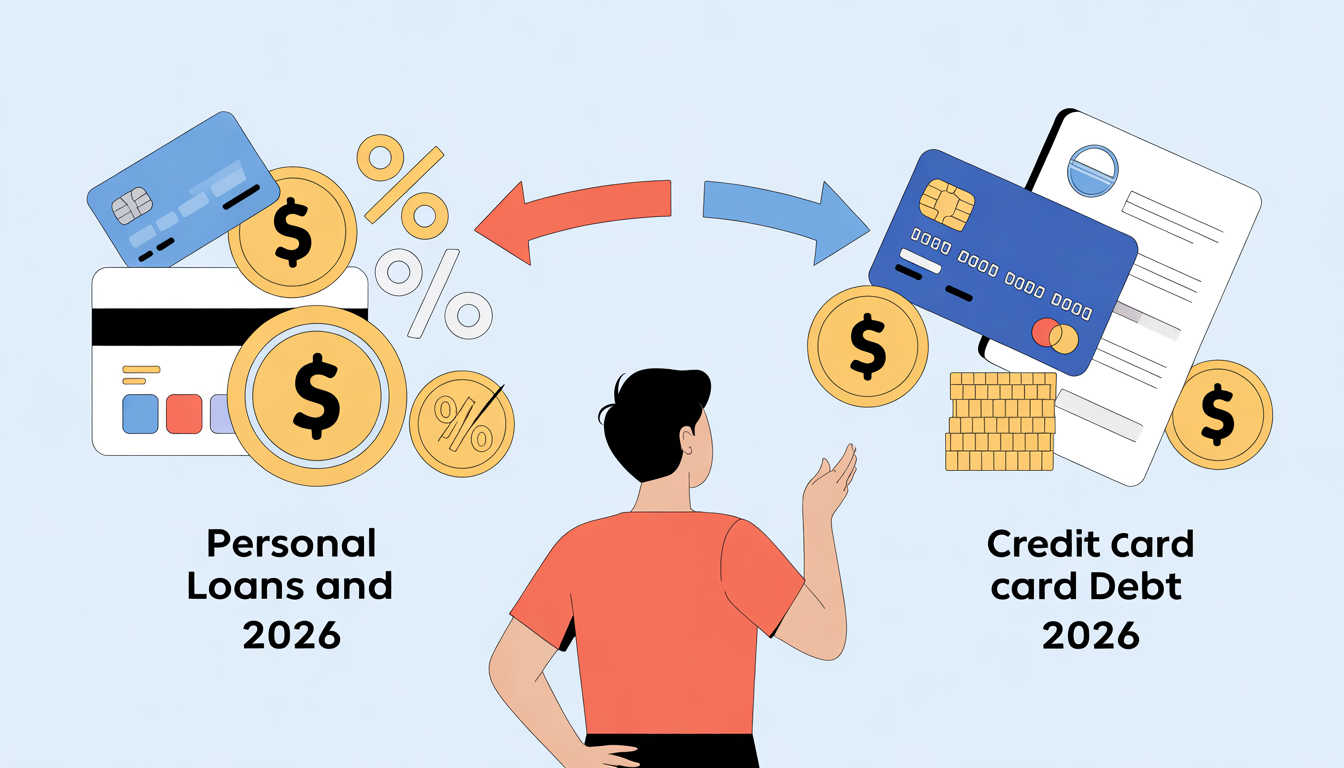
Managing debt is a major part of personal finance. In 2026, many people struggle with high-interest debt and wonder whether a personal loan or a credit card is the better option. This guide will explain the differences, costs, and strategies to help you save money and reduce debt faster.
Understanding Credit Card Debt
Credit cards are convenient, but they often carry high-interest rates. Using them wisely is key to avoiding debt traps.
How it works:
- Borrow money up to your credit limit.
- Pay interest if you don’t pay the full balance each month.
- Minimum payments are usually small, but interest adds up quickly.
Pros:
- Flexible borrowing for short-term needs
- Rewards like cashback or points
- Instant access to funds
Cons:
- High-interest rates (15%–30% APR)
- Can lead to long-term debt if unpaid
- Minimum payments slow down debt repayment
Example:
If you have a $5,000 balance at 20% APR and pay only the minimum, it could take years to pay off and cost thousands in interest.
Understanding Personal Loans
Personal loans are fixed loans from banks or lenders, usually with lower interest rates than credit cards.
How it works:
- Borrow a fixed amount for a specific purpose.
- Pay back in fixed monthly installments over a set term (1–5 years).
- Interest rates are usually lower, especially for good credit scores.
Pros:
- Lower interest rates than credit cards
- Predictable monthly payments
- Can help consolidate multiple debts
Cons:
- Less flexible — can’t borrow more without reapplying
- May include origination fees
- Late payments can hurt your credit
Example:
A $5,000 personal loan at 10% APR over 3 years could save you thousands compared to paying the same amount on a high-interest credit card.
Comparing Costs: Personal Loan vs Credit Card
| Feature | Credit Card Debt | Personal Loan |
|---|---|---|
| Interest Rate | 15%–30% | 8%–15% (depends on credit) |
| Monthly Payment | Flexible, minimum required | Fixed installments |
| Repayment Term | Open-ended | 1–5 years |
| Fees | Late fees, over-limit fees | Origination fees possible |
| Rewards | Cashback/points | Usually none |
| Best For | Short-term convenience | Debt consolidation, larger expenses |
Key Insight:
Credit cards are best for convenience and rewards if you pay in full. Personal loans are better for reducing high-interest debt faster.
When to Use a Personal Loan
- Consolidating multiple credit card balances
- Paying for a major expense like medical bills or home repairs
- Reducing monthly payments with lower interest
Example:
If you owe $10,000 across two credit cards at 22% APR, a personal loan at 12% APR can save hundreds per month in interest.
When to Use a Credit Card
- Short-term borrowing you can repay quickly
- Earning rewards or cashback
- Everyday purchases under control
Example:
Using a credit card for $500 groceries, paid in full before the due date, gives rewards without interest.
Strategies to Save Money in 2026
- Debt Consolidation – Use a personal loan to combine high-interest credit card debt into one lower-interest loan.
- Pay More Than Minimum – Whether using credit cards or loans, paying more than the minimum reduces interest costs.
- Track Spending – Avoid accumulating new debt while repaying.
- Compare Rates – Always check multiple lenders to find the best personal loan rate.
- Emergency Fund – Keep savings separate to avoid relying on credit cards for unexpected expenses.
Conclusion
In 2026, personal loans usually save more money than credit card debt when managing large balances due to lower interest rates and fixed payments. Credit cards are convenient and offer rewards, but high interest can make them expensive if balances carry over.
Smart Approach:
- Use a personal loan to consolidate high-interest debt.
- Use credit cards responsibly for short-term purchases with rewards.
- Combine both strategies to stay debt-free and maximize savings.
